
Nothing Unusual
- a short story about a quiet life that slips out of neutral

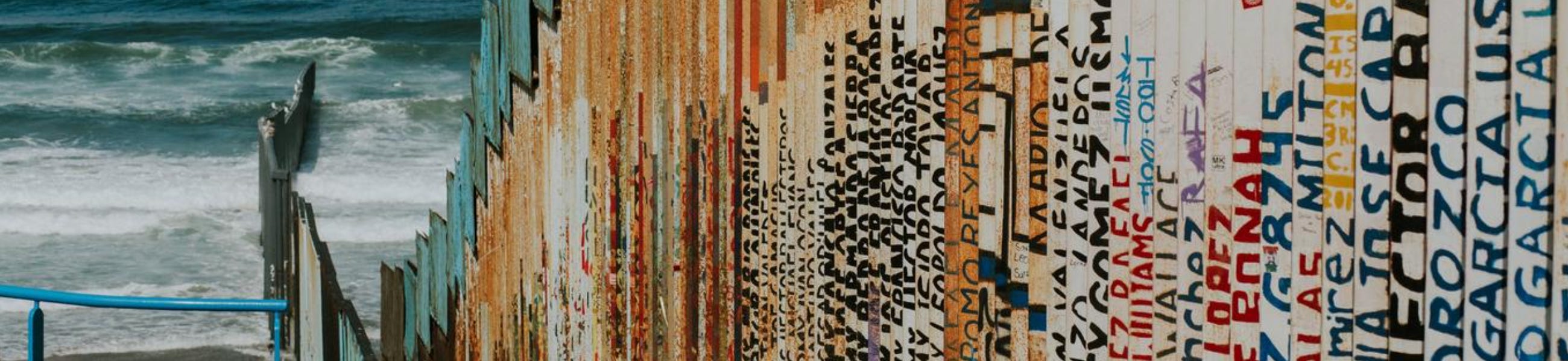
The building smelled like other people’s dinners.
On Tuesday nights he could tell who was cooking by the time he reached the second floor. Garlic from 2B. Microwave burritos and incense from 3A. Someone on the first floor had discovered turmeric and was still in the phase of putting it into everything.
His own place smelled like the inside of a refrigerator. Clean, a little cold, nothing particular.
Mark ate standing at the kitchen counter. Frozen lasagna, cut into squares. The fork scraped the cardboard tray when he chased the last bit of cheese into a corner. The television in the living room was on with the sound low, the way he liked it when he was alone. Voices rose and fell without meaning much, filling the silence so it did not feel like silence.
On the table was a letter from the care home. He had unfolded it when it came and then folded it again along the same creases. The paper had softened at the edges.
We encourage family to visit whenever possible.
Encourage was a polite word. It made you feel they were on your side.
Beside the letter lay a small stack of printouts from his own office, pages he had put in his bag without thinking. Claim summaries. He recognized the headings he saw all day.
Out of network.
Policy does not cover this procedure.
Documentation incomplete.
He was not sure why he had started bringing them home. Maybe the office could not hold everything he did there. Or maybe he had just needed somewhere to put them that was not his desk.
His phone buzzed on the counter. A message from Anna.
Got a favor. Call when you can?
He turned the phone face down. The lasagna had gone a little firm at the edges, but he kept eating until the tray was empty. In the living room, a studio audience laughed on cue. He knew the rhythm of those shows well enough that he could tell when applause was coming, even without the picture.
He rinsed the fork, dropped the tray in the trash, and came back to the table. The letter and the printouts were still there. The room looked exactly as it had ten minutes earlier. Sometimes he noticed that. Sometimes he did not.
He picked up the phone and called Anna before he could talk himself out of it.
She answered on the second ring.
“You busy,” she said.
“Not really.”
“That is the nice thing about you,” she said. In the background he could hear a cartoon and one of the kids arguing about something. A pan clanged softly. “You are movable.”
He smiled, although she could not see it. Movable. That was one word for it.
“What is the favor,” he asked.
“You still have the truck,” she said.
“Yes.”
“And your passport is not expired or anything.”
“I do not think so,” he said.
She laughed. “That is a yes or a no, Mark.”
“Yes.”
“Good. I need you to take a package down to Puerto Nuevo. To Tío Luis.”
He had not seen their uncle since they were kids and he had come up for a few months of roofing work. The man had smelled of cigarettes and salt. Their father had called him a character, in a tone that suggested both admiration and warning.
“Why me,” Mark asked.
“Because I cannot get away,” she said. “We are short at the clinic. The kids have school. You know how it is. And you like errands. You said that once.”
“I did,” he said.
“You did,” she insisted. “You said you like having a job with a start and an end. This is that. There is a box with some cash and some lab results and some other things he needs. He does not want it in the mail. You drive down, hand it to him, drive back. Eat a taco or something. You will be home by night.”
He pulled the care home letter under his hand so he did not have to see it.
“Why does he not trust the mail,” he said.
“Because he is him,” Anna said. “Because half his patients are undocumented and the other half are paying in coins. Because sometimes envelopes get opened when they should not. I do not know. It is Luis. It does not matter. Can you do it.”
“Yes,” Mark said.
“Thank you,” she said. “I will drop it at your place in the morning. You are a lifesaver.”
She said it lightly, not as if she believed it. The cartoon in the background got louder. Someone shouted something about homework. She hung up after a quick goodnight.
He set the phone down. The words on the care home letter blurred for a moment until he blinked them back into focus. He folded it again and slid it under the stack of claim summaries.
When he turned off the television, the apartment went very quiet.
———————————— ** ————————————
He left the next morning before the building had fully woken up. The hallway was dim and smelled like floor cleaner. He carried the box tucked against his hip. It was not large. Brown paper, tight tape, Anna’s handwriting on the top.
In the parking lot his truck sat where it always sat. The same oil stain underneath, the same crack in the windshield he kept meaning to deal with and never did.
He put the box on the passenger seat and sat for a moment without starting the engine. The air was cool, faintly salty. Somewhere a sprinkler ticked.
On the way out of the complex, he passed the care home shuttle turning in. He recognized the logo on the side from the letterhead. A driver in a polo shirt stared straight ahead as if looking at something only he could see.
At the end of his street he checked the mirror. A dog stood in the cul de sac, watching the truck. A mixed breed, short fur, ribs showing a little. When he turned the corner it trotted after him for a while, then slowed. He watched it shrink in the mirror until another car turned into the street and blocked his view. When it cleared, the dog was gone.
On the freeway the sun was already high enough to make the lanes look pale and flat. He merged south. The same billboards he always passed. Injury lawyers pointing at the sky. A woman in yoga pants selling mattresses. A cartoon avocado with sunglasses.
He turned the radio on and found a talk station. Two hosts were arguing about something that seemed important to them and unimportant to him. He left it on anyway. When they went to commercials, he turned it off and let the sound of the engine fill the cab. In the quiet, phrases from the claim summaries drifted up like air bubbles.
Experimental.
Not medically necessary.
Policy does not cover this provider.
At a rest stop near San Onofre he bought coffee that was too hot and tasted like cardboard. He drank half of it walking back to the truck, feeling it sit wrong in his stomach. He drove on.
South of San Diego the freeway bent toward the border. The landscape shifted. The hills grew patchy. Paint peeled on older buildings. The billboards crowded closer together, English giving way to Spanish and back again. The air coming in through the vent felt different, a little heavier.
At the crossing, lanes of cars moved in slow fits under a ceiling of steel beams. Vendors walked between bumpers selling gum, phone chargers, images of saints. A man with a plastic crate of oranges balanced against his hip caught Mark’s eye, then moved on when he saw there was no interest.
A Mexican guard with a tired face came to his window.
“Dónde va,” he said.
“Puerto Nuevo.”
“Cuánto tiempo.”
“Solo por el día,” Mark said.
The guard glanced at the box on the seat.
“You visit family,” he asked in English.
“Yes,” Mark said.
The guard nodded once and waved him through.
Tijuana came in with a quick rush of buildings and noise. Lanes appeared and disappeared. Cars pushed into gaps that did not exist and somehow made room. Mark kept both hands on the wheel, following the blue signs for the toll road. A dog slept in the shadow of an overpass. A boy kicked a flat ball in a dirt lot. At a light, a man juggled three clubs in front of the stopped cars, then ran to collect coins before the signal changed.
He did not feel like he was in a different world. He felt like he had come to a place that had always been there and had never needed him.
Once he reached the coastal road, the city thinned out. Tollbooths came and went. Concrete barriers separated him from the sea. The ocean lay flat and bright to his right, the kind of blue that looked like it would be cold if you touched it.
He rested his hand on the box. The tape was smooth under his fingers. He thought of opening it once, not because he needed to know what was inside, but because there was a tightness in him that wanted to break something, even a seal of tape. He kept his hand still.
———————————— ** ————————————
Puerto Nuevo was smaller than he expected. A cluster of streets tucked between the highway and the water. Buildings of two or three stories, painted in colors that had faded differently in the sun. Restaurants with signs for lobster, a church with a cracked bell tower, houses that looked like they had been added to one room at a time.
He followed Anna’s directions to a narrow side street that ran behind the main strip. There, next to a low concrete wall, was a small sign hand-lettered with the word “Clínica.” The building was the size of a double garage. Two plastic chairs sat outside. A woman in one of them looked up at him, then back at her phone.
Inside, the air was cooler. The waiting area had four chairs and a small table with a stack of old magazines. A child’s drawing of a house and a sun was taped crookedly to the wall.
A door opened at the back and a man stepped out. He was shorter than Mark remembered, his hair gone thin on top, his face lined, but the eyes were the same. Sharp, amused, taking everything in.
“You are Anna’s brother,” he said.
“Mark.”
“Of course,” Luis said. “You were taller last time.”
“I was twelve,” Mark said.
“Then it is good you are taller now,” Luis said. “You brought my present.”
Mark held out the box. Luis took it, shaking it once by his ear as if listening for something loose inside, then set it on the desk. He did not open it.
“Sit,” Luis said. “I am between people.”
Mark sat. In the next room he could hear a voice speaking low and steady, then a woman answering. A cabinet door opened, shut. A tray clinked.
A minute later a woman in her forties came out, holding a small brown paper bag in one hand and a folded prescription slip in the other. Her face was tired but calm. She thanked Luis without looking at Mark and left.
Luis called another name into the back. A younger woman came in, hands folded tight around a purse. Their conversation was quick. Luis tapped a form with his pen.
“The lab did not send the results,” he said. “They want you to pay again.”
She said something under her breath.
Luis sighed. “They say the order was not complete. One box not checked. No test.”
Mark heard the words in his own office voice. Incomplete. No record. Not covered.
“What can we do,” the woman asked.
Luis shrugged, then wrote something on a pad.
“We write it again,” he said. “We send it again. I call them. Maybe they listen. Maybe they do not. In the meantime you take this. It will not hurt.”
She nodded. He tore the sheet and handed it to her. She thanked him twice and left as quietly as she had come.
Luis pushed the door closed behind her and came back to the desk. He glanced at Mark.
“You still working for the insurance,” he asked.
“Yes.”
Luis opened the box now. Inside were bundles of cash held with rubber bands, a stack of printed lab reports, two pill bottles, and an envelope with his name on it. He checked the lab reports quickly, the way someone checks if all the pieces are in a puzzle, then put them aside.
“You like your job,” Luis asked.
“It is fine,” Mark said.
Luis snorted. “Fine is a polite word. It makes you feel you chose it.”
He did not press. He was already counting the cash, checking numbers against something in his head. When he finished, he slid the envelope into a drawer.
“You did not have trouble crossing,” he said.
“No,” Mark said.
“It is easier in this direction,” Luis said. “In the other they ask more questions.”
He glanced at Mark again, as if deciding how much more to say.
“You want coffee,” he asked.
“Yes,” Mark said.
In the back room, the clinic was little more than a narrow space with a bed, a sink, a shelf with supplies. Coffee boiled on a single burner. There were three mugs, all chipped in different places. Luis poured for both of them.
While they drank, an older man came in complaining of a cough that would not go away. Luis listened, put a stethoscope to his back, nodded, wrote out a prescription. The man mentioned a bill from a hospital in San Diego. He had gone there once. They had given him a number so large he remembered the look of it on the page more than the visit itself.
“They said my plan did not work there,” the man said. “Out of their network.”
Luis made a small sound in his throat.
“They are very careful whom they help,” he said. “Here we are less careful. Breathe again.”
Mark stood by the doorway, holding his mug. The cough was rough, worse when the man tried to hold it back. Luis wrote another note on the pad and tore it off.
“You pay when you can,” he said. “Or you bring fish. You fish, yes.”
The man smiled, embarrassed. “Sometimes,” he said.
“Then bring me something that does not taste like dust,” Luis said. “We call it even.”
The man laughed, thanked him, and left.
Luis washed his hands, dried them on a towel, and looked back at Mark.
“Do not stand there,” he said. “Hold the door while I tighten this.”
He pointed to a loose hinge on the exam room door. Mark stepped forward and held the door in place while Luis drove a screw into the frame. The drill squealed, then bit down. Dust shook loose.
“You could have called a landlord,” Mark said.
“Why,” Luis said. “You came.”
They worked in silence until the door closed without catching.
“That is enough,” Luis said. “You should go before traffic finds you. If Anna calls, tell her I am alive. If your mother calls, tell her nothing. She will not remember it.”
The last line landed without weight, like a fact that had been true too long.
Mark opened his mouth to say something and found nothing useful. He thanked Luis, said goodbye with an awkward hug that hit too hard on one shoulder, and stepped back into the bright street.
———————————— ** ————————————
Driving north, the sky had shifted. The light over the sea was flatter now, the blue of the water duller. The buildings along the highway looked closer together.
Mark’s hands on the wheel felt damp. The coffee sat heavy in his stomach. He found himself rehearsing answers to questions that had not been asked yet.
Where did you go.
How long.
Reason for travel.
He tried to think of something else and thought instead of the man with the cough, the way he had looked at the bill from the hospital as if it were a joke he did not get. The words Luis had repeated. Out of their network.
At the edge of Tijuana the traffic thickened. Lanes squeezed together. Vendors walked between cars selling gum, newspapers, bags of peeled oranges. Someone was playing music loud enough that he could feel the bass in his chest.
He joined a line that led toward the inspection booths. The wait was slow. A boy knocked on his window to offer him churros. Mark shook his head. The boy moved on.
The closer he got to the front, the more he felt the space inside the cab shrink. He turned the radio off. His heart was beating faster than the situation seemed to warrant. There was nothing illegal in the truck. The box was empty now. He had left the clinic with nothing in his hands.
Still, he kept going over what he would say if anyone asked about his day.
At the booth, a United States officer in a dark uniform stepped forward. The man’s face was calm in a practiced way.
“Where are you coming from,” he asked.
“Puerto Nuevo.”
“Reason for travel.”
“Visiting family.”
“Anything to declare.”
“No.”
The officer glanced into the cab. His eyes flicked for a moment to the passenger seat, where the impression of the box still faintly marked the upholstery.
“You have contact with any medical facilities or providers while you were in Mexico,” he asked, reading from a small laminated card in his hand. “Clinics, hospitals, pharmacies.”
Mark heard Luis’s voice in his head. Here we are less careful.
“Yes,” he said. The word came before he could edit it.
The officer looked at him more directly now.
“What kind,” he asked.
“A small clinic,” Mark said. “My uncle’s place.”
The officer’s pen paused over a form.
“Purpose of visit there,” he said.
“Dropping something off from my sister,” Mark said. “Personal.”
The officer tapped the pen once on the paper, then pointed to a line.
“Any medical documents, prescriptions, controlled substances,” he said. His tone did not change. This was a question he had asked many times.
Mark thought of the lab results, the pill bottles in the box, the envelope of cash. He pictured the woman with the unfinished lab order, the man with the cough, Luis writing notes on a pad with quick, neat letters.
He could say yes. The officer would ask more questions. There would be forms. Maybe a call. Maybe nothing would happen. Maybe something would.
His tongue felt thick in his mouth.
“No,” he said.
The officer watched him for a second longer than was comfortable, then wrote something on the form, handed it back, and stepped back from the truck.
“Welcome home,” he said.
The gate lifted. Cars moved forward. Mark eased his foot onto the gas. His hands left damp prints on the wheel.
———————————— ** ————————————
On the U.S. side the freeway opened again into its familiar pattern. Green signs. Reflective lane markers. The same outlets and chain restaurants marching north. The day looked as it always looked. No one on the road could tell where he had been an hour ago.
He turned the radio on. Music this time, not talk. He let it play without listening to the words. His phone buzzed once in the cup holder. He did not look. It could have been Anna. It could have been the care home. It could have been no one.
Near Chula Vista he pulled off to get gas. The station was bright with overhead lights, the pumps humming. The store smelled like coffee and sugar and cleaning products.
Inside he bought a bottle of water and a plastic-wrapped sandwich. The clerk did not look up when he paid. Outside, a man was filling the tank of a minivan, kids visible in the back seats through the tinted glass. The ordinary weight of other people’s lives pressed lightly at the edges of his awareness.
Back on the freeway, he passed the exit that would take him straight home, then signaled for the one after it. The care home was ten minutes inland, up a broad road lined with palms and low shopping centers. He had driven past it many times without turning in. The sign at the entrance had the same logo as the letter. An easy font, meant to be reassuring.
He parked and sat with the engine off. The building was two stories, beige, with white trim. Light spilled from the lobby onto the path. Through the glass doors he could see a woman at a desk, a man in a cardigan walking slowly with a walker, a television on the wall showing a game show.
He did not feel ready. He did not feel anything like ready. He also did not feel like he could leave without going in.
Inside, the air was too warm. It smelled faintly of soap and something boiled. The woman at the desk smiled with the kind of smile that had been practiced to cover many situations.
“Can I help you,” she asked.
“I am here to see my mother,” he said. His voice sounded odd to his own ears. “Margaret Haines.”
She checked a list.
“She is in the day room,” the woman said. “Down the hall, second left.”
He signed his name on a sheet without reading the columns. The pen skipped on the paper. For a second he thought of all the forms he had read and sent back to people, telling them no in different ways.
The day room was a large space with chairs arranged around the walls and a television playing the news with the sound off. A few residents sat in front of it, eyes closed or half watching. Others talked in low voices or talked to no one.
His mother sat in a chair by the window. The light caught the side of her face, softening the lines. Her hair was thinner than the last time he had seen her. Her sweater hung a little loose at the shoulders. Her hands rested on her lap.
He stood in the doorway for a moment. No one introduced him. There was no right way to begin.
He walked over and sat in the chair beside hers.
“Hi, Mom,” he said.
She looked at him slowly, as if the movement itself took effort. Her eyes moved over his face, searching for a pattern she half remembered. Then she smiled, polite and a little uncertain.
“You visiting someone,” she asked.
“Yes,” he said. “You.”
She laughed once, the sound small. “Is that right,” she said.
He nodded.
They sat together in the quiet. The television flickered. A nurse walked through with a tray of cups. Outside the window, a palm tree bent slightly in the breeze and straightened again.
His mother picked at a loose thread on her sweater.
“You work here,” she asked.
“No,” he said. “I am just here today.”
“That is nice,” she said. “Nice that people come.”
He could feel words gathering somewhere in him, explanations and apologies and stories that might have made sense years ago. They felt useless here, like paperwork in the wrong language.
On the arm of her chair, a screw had worked itself loose. The arm wobbled when she leaned on it. He found himself holding it steady without thinking.
“Careful,” he said.
“It has a mind of its own,” she said, pressing down again, making it wobble on purpose now. She seemed amused by that. “Like your father.”
He smiled. The remark landed in him with a small, familiar ache. She had said it many times when he was growing up. It was one of her lines, worn smooth with use.
When she looked away at the television, he tightened the screw with his fingers as best he could. It was not much, but the arm steadied a little.
They sat for another ten minutes. She asked him once where he lived now. He told her. She nodded as if that were a reasonable place to live. Once she closed her eyes, then opened them again and seemed surprised to find him still there.
“I should let you get back to things,” he said.
She patted his hand as if he had done her a small favor.
“You are a nice young man,” she said.
He was not young, but he did not correct her.
In the lobby, he signed his name again on a sheet marked with times. Coming. Going. The woman at the desk said, “Have a good evening,” as if it were possible and he might.
Outside, the air felt cooler after the warmth inside. The sky over the parking lot was turning a slow, even gray. The palms along the road moved just enough to show there was a wind.
He sat in the truck with the door open for a while, feet on the asphalt. The freeway noise in the distance sounded like the ocean when you stood far from the shore and did not look at it.
Nothing in him felt neatly resolved. He did not feel like a different person. He had taken a box to his uncle, watched people at a clinic, told a small lie at a border, sat for a quarter of an hour with a woman who did not know him but had once known him better than anyone.
He closed the truck door and started the engine. The headlights washed a pale cone over the pavement. When he pulled out of the lot, the tires made a soft sound on the road, the kind of sound you only hear when you are listening for it.
He turned toward home.
It feels as though Mark is living on autopilot. Lonely? As if something inside of him is broken.
You did amazing with this one.