
The Weight of Sugar
- a short story about the quiet human cost of moving between two overlapping realities

I. Morning
Lani locked the door of the six-million-dollar home behind the couple and stood for a moment in the quiet. The house was still cool inside, blinds half drawn, the golf course and ocean already bright but holding their distance. A ceiling fan spun silently, keeping its own time.
“It’s so peaceful,” the woman had said, running her hand along the marble counter like it might remember her. “You’re so lucky to live here.”
Lucky. She had stopped correcting people years ago. Lani smiled the way she had learned to. Practiced but not false, and walked them to their rental car. They asked about the weather, the traffic in Kapaʻa, and if the power ever went out on the island. She answered cleanly. She always did.
When they drove away, she took her phone out of her pocket, checked it, then put it face down on the passenger seat of her car. Her Louis Vuitton handbag sat there too, like an object she sometimes forgot was hers.
She drove toward home. Cresting over the ridge, the west side of the island came into view. ‘Ele’ele came back into itself gradually. More trucks. Less cars. Fewer places pretending to be something else. Older houses beaten up and closer together, closer to the road. Dirt yards that said nothing. Washing lines already moving in the breeze. Dogs asleep where the earth stayed cool.
Her son’s truck wasn’t there. She called him.
“You still good for tonight?” she asked.
“Yeah,” he said. She could hear the shop behind him, voices layered, a register opening and closing. “I’ll make it.”
“What time you off to your next job?”
“Soon enough.”
She waited for him to say more. He didn’t.
“Okay,” she said. “We’ll be ready.”
She hung up first.
Her father was outside when she pulled in, chair angled to catch the breeze before the heat came on properly. His shoes were lined neatly beside him. The small kit sat on the table within reach.
When he was young, they burned the sugarcane here before cutting it. The smoke was sweet and bitter at the same time. It clung to clothes, to hair, to the back of your throat. You could taste it for hours afterward.
The land paid well. The work did not.
“You eat?” she asked.
“Later,” he said.
She nodded as her mind moved on.
Inside, she changed out of her work clothes and stood for a moment unsure what to put on next. It was too early to think about this evening, but she did anyway. She laid one outfit on the bed, then another, then paused.
His spare pressed officer’s uniform still hung in her closet, the sleeve brushing against her good dress. Untouched. A couple weeks this time.
When she came back out, her father was checking his blood sugar. He did it without ceremony, like counting change. She watched without saying anything. He wiped his finger, closed the kit, set it back where it belonged.
Lani had offered to cover his supplies outright. Her father had insisted on contributing, even if it meant paying her back slowly.
“What time we going?” he asked.
“Later,” she said.
That seemed to satisfy him.
She stepped back outside and looked once more toward the road. The day was just beginning, already moving faster than it looked.
II. Leaving Koloa
After his mother hung up, he put his phone down on the counter. It was late morning but the shop had warmed beyond what the fans could help. The fish case hummed steadily, the glass fogging and clearing in cycles. A line of tourists stretched out the door, mesmerized by the poke menu that hung on the wall. Shoyu, wasabi, limu, Hawaiian, tako. Like a grownup’s ice cream store.
One woman held her phone above the counter, angling for the light.
“Can you wait just a second?” she said, already taking the picture.
He did. He always did.
The tuna was already cut. The rice already cooling. He watched the phone hover, then disappear, then come back once more for safety. She smiled, satisfied, as if something had been captured rather than delayed.
At the register his coworker leaned over and said, quietly, “You think they eat it after?”
“Maybe,” he said. “If it gets enough likes.”
They laughed. Not cruelly. Just enough to get through the shift.
He wiped down the counter, washed his hands, checked the clock mounted crooked above the door. Still fine. Close, but fine. He untied his apron, folded it the way he’d been taught, and hung it back where it belonged.
He liked finishing things cleanly. It made the next shift easier.
Outside, the heat came up fast. The truck sat where he’d left it, paint dull, rust creeping along the edges like something alive. He climbed in, windows down, and let the engine idle longer than necessary.
As he pulled out, a family crossed the street carrying bowls they hadn’t finished. He waited, patient. He always was.
He checked the time once more, then headed toward Port Allen.
III. Port Allen Afternoon
The dock was already loud when he arrived. Engines running. Music bleeding from somewhere unseen. The catamaran rocked gently against its lines, impatient to leave.
“You cutting it close brah,” someone called.
“I’m here,” he said, grinning. That counted.
He slipped into the shirt with the logo, grabbed a stack of plastic cups, and started pouring. Ice first. Too much. Rum second. Not enough. Juice to cover the difference. He handed them out with practiced ease to eager hands.
The green cliffs rose in the distance, sharp and indifferent. He’d seen them all his life. Today they slid past like a backdrop, beautiful and unmoved. He sensed the shift in the trade winds.
“Don’t worry,” he said to a passenger, fitting a snorkel mask to an older man who already looked terrified. “Just breathe. Fish are friendly. I was working with them all morning.”
They weren’t ready for how close the fish would be. None of them ever were.
When the boat slowed and the blue water opened beneath them, the first tourist in screamed, gagged, then laughed, said something garbled through their snorkel, then screamed again. Others followed, splashing hard, masks crooked, hands flailing until the water settled them, all of them drifting apart like they had been asked not to.
He watched from the rail, one hand steadying the ladder, counting heads, calling out reminders he knew wouldn’t be heard.
“Look down.”
“Keep the top of the snorkel above the water. Yes, above!”
Between rounds he checked his phone. No messages. That was fine. It meant nothing else needed him yet. He wiped salt from his arms, adjusted a strap, made another joke that landed exactly where it was supposed to.
By the time they turned back, the sun had shifted, the light flattening. He helped the last of them aboard, collected empty cups, stacked them without thinking. Masks and snorkels into the freshwater bin.
Back at the dock, the noise fell away quickly. Engines off. Lines tied. Tourists already planning dinner in Poipu.
He changed shirt, rinsed his face at the outdoor sink, and headed for the truck.
The day wasn’t done yet. It was lining itself up.
IV. Return Home to ‘Ele’ele
Lani’s son got home, just up the road from Port Allen, while the light was still holding. The truck ticked softly as it cooled. He shut it off and sat for a moment, letting the salt dry on his skin.
Inside, his grandfather was waiting.
He moved slower now. Careful with his feet. The small kit rested on the table beside him, already closed. He had done what he needed to do.
“You ready?” the boy asked.
His grandfather nodded. Not yet, but close enough.
He helped him with his shoes, tying the laces the way they both knew worked best. Not too tight. Not loose. He had learned to do this without looking, the way you learn things you don’t want to need.
He waited while his grandfather stood, steadying him without announcing it.
Outside, the air had shifted. Less heat. More movement. The trades coming through at last.
Lani came out with a small bag, already dressed. She looked at her son, then at her father.
“You okay?” she asked.
“Yeah,” the boy said. “We’re good.”
They walked together to the truck. He helped his grandfather up, took the long way around so he didn’t have to climb. The door shut with a familiar sound. He waited until his grandfather was settled before getting in himself.
As they pulled away, Lani glanced once at her phone, then put it face down again.
They drove down the hill towards Hanapepe as the light thinned, the road emptying ahead of them.
V. Poipu Night
The call came in as sunset faded to night, that hour when Poipu still looked soft. A truck into a pole. No sirens needed. Blue flashers were still protocol. The officer turned the cruiser around without thinking about it, assuming there would still be time.
The pole leaned but held. The truck did not. Its front end folded in, steam lifting faintly into the warm air. A shirtless man sat on the curb with his legs stretched out, hands resting open on his knees. He did not look at the truck.
The officer knew him. Not by name. By repetition. By family he did not mention anymore. By names he recognized from Lani’s side of the island.
He had asked him to move along more times than he could count. Always the same places. Near the beach access. Near the bathrooms. Pockets of shadow where cars stayed overnight and the ocean could still be heard. Places that had names long before there were signs. Now there were signs. White lettering. Rules that looked clean and simple from a distance.
No camping.
No overnight parking.
He would nod, gather his things slowly, shoes lined up, like someone being asked to leave a room he had never fully entered. By morning he would be somewhere else. By night he would drift back, pulled by tides older than policy.
Tourist cars slowed as they passed to look. Rental Jeeps mostly. Windows up, air conditioning humming. Reservations already made. Faces pale and briefly lit blue looking out, curious and careful, then gone again. One car slowed more than the others.
The man on the curb lifted his head at the same moment a girl wearing glasses in the rear seat turned to look out. Their eyes met. Just long enough to register surprise on both sides. Her face flashed bright and startled. His stayed where it was. Neutral. Familiar with being seen this way. Blue lights flashed again. The car rolled on.
The man on the curb stayed seated and watched the palms, their fronds barely moving. The trades had shifted. He could feel it.
Blue light washed over them again. The surf sounded faint, out of place. A family crossed the street toward dinner at the beach.
The officer checked his watch. If he left now, the call would follow him. If he stayed, the night would.
Too early to leave. Too late to arrive the way he’d meant to.
Someone asked if everything was okay. The officer said yes. The word came easily. His phone was still in his pocket. He did not take it out. There would be a moment later when the silence would mean something. He felt it already, tightening.
No tow truck in sight. He checked his watch again.
VI. The Bon Dance
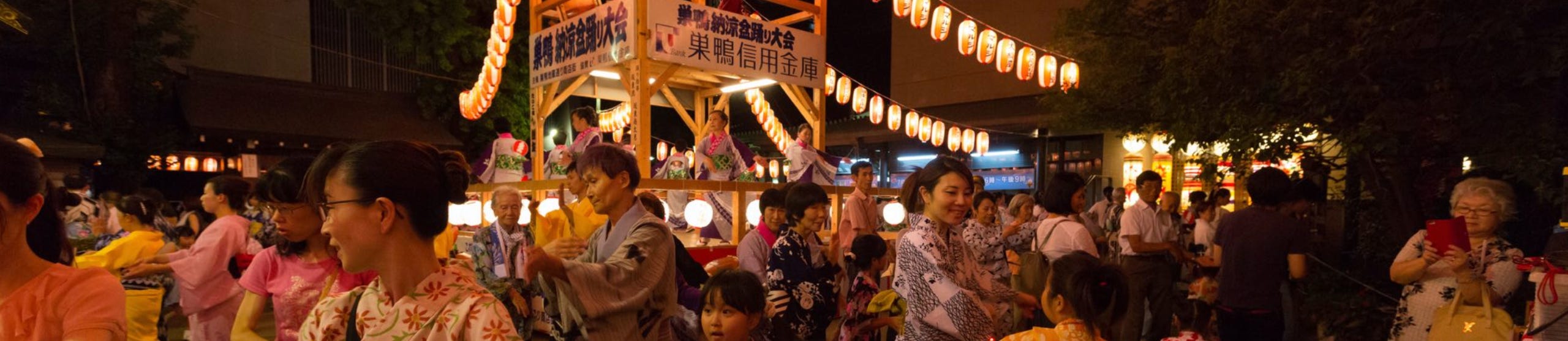
Lani, her son and her father parked along the edge of the field where the ground was already worn smooth. Lanterns were being lit one by one, their paper skins warming into color. The air smelled faintly of dust and food and something sweet drifting from a food truck farther back. Generators humming into the night.
People gathered without urgency. Old friends. New children. Faces that belonged here whether anyone noticed them or not.
The drumming of the bon daiko hadn’t started yet.
Lani helped her father from the truck. He stood for a moment before stepping away, testing the ground. Her son stayed close, a hand hovering near his elbow without touching.
They moved slowly toward the edge of the circle.
Someone called out a greeting. Someone else answered from across the field. The sounds carried easily in the open space despite the crowd.
Lani looked toward the road once. Then again, a little later. She did not check her phone.
The drum sounded. Then again. A pause. Then the rhythm found itself. A traditional song played over a loudspeaker.
Soon the old women, tuned by previous generations to the drum before it sounded, began to walk clockwise around the pole.
Their feet rose and fell soft without hurry. Their hands rested at their sides. The movement was practiced, older than instruction.
Children drifted in and out of line, pulled away by friends, pulled back by something they could not name. Someone laughed too loudly and was corrected without being looked at.
Lani stood where she was, watching the circle form. Alone.
Her father on the edge remained standing longer than she expected. When he finally sat, someone had already brought a chair. Someone he didn’t recognize handed him water. He nodded his thanks and settled, his attention still fixed on the movement.
Her son stepped forward when the rhythm caught him. He danced badly on purpose, shoulders loose, feet half a beat behind. Someone laughed and joined him. The circle filled and widened.
Lani watched him disappear into the pattern, then stepped in herself. She felt the space beside her stay empty. Her shoulders loosened before she noticed they had been tight.
She stepped forward. Not as a decision. As a response.
The lantern light softened everything. Dust lifted and settled. The drum stayed steady.
Beyond the field, the road remained dark.
The dance continued.
VII. After
The taiko kept its rhythm even as the circle thinned. Kids roamed in packs of laughter, eating little cakes in the shape of fish. Some people drifted away toward food trucks or folding chairs. Others stayed, moving until the dust clung to their ankles and the night cooled around them.
Lani stepped out of the circle and stood beside her father. He watched the dancers without turning his head, hands folded in his lap. When the drum paused, he breathed out slowly, as if he had been holding something the whole time.
Her son came back flushed and smiling, sweat darkening the collar of his shirt. He leaned down to say something to his grandfather, who nodded once and reached for his hand. They stayed that way for a moment longer than necessary.
The lanterns swayed lightly now. Somewhere farther off, a car passed without slowing. The road took it away.
Lani felt the evening settle. Not resolved. Just here.
The drum sounded again. Someone stepped back into the circle.
Surely there's a second part of this beautiful piece, yeah?